Explore China
Discover the best destinations across China

Discover the best destinations across China
Discover the best destinations across China
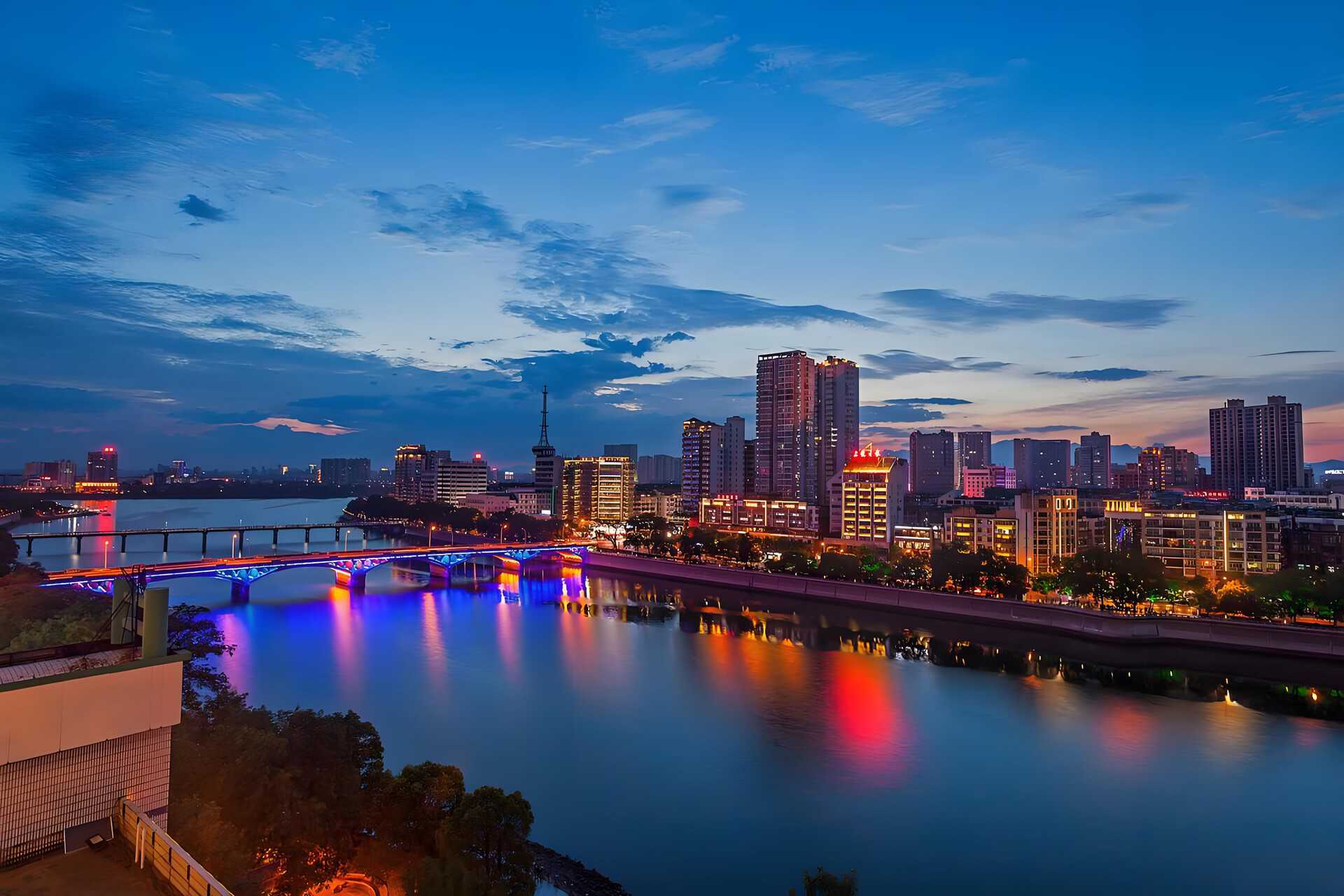
Shangrao is located in the northeastern part of Jiangxi Province, at the junction of Fujian, Zhejiang, Anhui, and Jiangxi provinces. It has a humid subtropical monsoon climate with distinct seasons and abundant rainfall. The annual average temperature is around 18°C, with hot and rainy summers, mild and less snowy winters, and pleasant weather in spring and autumn. It is a typical Jiangnan landscape city.
Shangrao has a long history, dating back over 1,800 years to the Eastern Han Dynasty when it was established as a county during the Jian'an period. It is the ancestral hometown of the Neo-Confucian master Zhu Xi and also one of the birthplaces of Taoism. The unique Danxia landform complements the ancient villages, with Wuyuan hailed as "China's most beautiful countryside" and Mount Sanqing being a renowned Taoist mountain, together forming Shangrao's profound cultural heritage.
Shangrao boasts diverse culture. Yiyang Opera is one of the four major opera styles of the Ming Dynasty, while folk activities such as Nuo dance and Taige have been passed down to this day. The local cuisine is mainly Jiangxi-style, emphasizing fresh and spicy flavors. Delicacies like Wuyuan tofu paste, Yanshan hot rice noodles, and Yiyang rice cakes leave a lasting impression. Local residents enjoy a leisurely life, taking pleasure in tasting tea, admiring scenery, watching operas, and attending markets.
In recent years, Shangrao's transportation has developed rapidly, with the Shanghai-Kunming and Beijing-Fuzhou high-speed railways intersecting here and Sanqingshan Airport opening multiple routes. Tourism has become a pillar industry while promoting a green ecological economy, building the 'Grand Beauty Shangrao' brand. In the future, it will achieve high-quality development with world-class landscape tourism and rural revitalization as its two wings.
The best time to visit 上饶 is Spring (March-May) and Autumn (September-November).
The best time to visit Shangrao is spring and autumn. From March to May, the rapeseed flowers in Wuyuan bloom, covering the mountains in golden hues and complementing the Hui-style architecture, creating a picturesque scene. From September to November, the weather is crisp and cool, with Huangling's autumn sun-drying display bursting with vibrant colors and the sea of clouds at Mount Sanqing being spectacular. Temperatures range from about 15 to 25°C, offering a comfortable experience.
In spring (March-May), Shangrao is warm and humid with an average temperature of 12-22°C. Wuyuan's Jiangling and Likeng are prime spots for admiring rapeseed flowers, azaleas bloom on Mount Sanqing, and Lingshan Scenic Area is covered with blossoming mountain flowers. It is recommended to wear a light jacket and bring rain gear.
In autumn (September to November), Shangrao has a clear sky with light clouds and an average temperature of 15-25°C. The Huangling Sun-Drying Autumn Festival takes place, Mount Sanqing welcomes its best season for viewing seas of clouds, and Guifeng is adorned with colorful red leaves. Around the Mid-Autumn Festival, you can also participate in local folk activities.
In the Jian'an period of the Eastern Han Dynasty, Shangrao County was established under Yuzhang Commandery, marking the beginning of the city's history.
The great Neo-Confucian master Zhu Xi was born in Wuyuan (then part of Huizhou), and his thought influenced East Asia for centuries.
Yiyang Qiang became one of the four major vocal systems of the Ming Dynasty, exerting a profound influence on operatic forms such as Peking Opera.
Mount Sanqing was listed as a national key scenic spot by the State Council, and later in 2008, it was inscribed as a World Heritage site.
The opening of the Shangrao section of the Shanghai-Kunming high-speed railway integrates it into the national high-speed rail network, boosting tourism and economic development.
Recommended places to visit

Taoist mountain, World Natural Heritage site, renowned for its奇特 peaks, strange rocks, sea of clouds, and misty waves, with an altitude of 1819 meters.

Cultural town, Hui-style ancient architecture cluster, once the hometown of Qing dynasty classical scholar Jiang Yong, retaining many ancestral halls and residential houses.

A typical mountain village, famous for its tradition of sun-drying autumn crops, with terraced flower fields and ancient streets and alleys full of character.

World Natural Heritage, Danxia landform wonder, shaped like a giant turtle, renowned as 'Turtle Peak on the River, Rare in the World'.

Taoist blessed land, known for its strange rocks, plank roads, and waterfalls, a newly popular internet-famous scenic spot.
UNESCO World Heritage Sites

World Natural Heritage, characterized by unique granite peak forest landforms and Taoist culture.

Listed as part of 'China Danxia' as a World Natural Heritage site, it is renowned for its uniquely shaped Danxia landforms.
Explore rich intangible cultural heritage and traditional crafts

National Intangible Cultural Heritage, ancient ritual dance, blending art and religion, with brightly colored masks.

National Intangible Cultural Heritage, one of the four major vocal styles of the Ming Dynasty, has had a significant influence on many local operas.
Must-know transportation for exploring the city
Located in the northern suburbs of Shangrao City, it connects to major cities such as Beijing, Guangzhou, Shenzhen, and Chengdu. It is about 10 kilometers from the city center and can be reached by airport shuttle bus or taxi.
50-100元(机场大巴)
The intersection station of the Shanghai-Kunming and Beijing-Fuzhou high-speed railways has frequent train services. It takes about 1 hour to Nanchang, about 1.5 hours to Hangzhou, and about 2.5 hours to Shanghai.
150-300元(二等座)
The city bus fare is 1-2 yuan and can be paid by Alipay. Shangrao Bus Station has buses to scenic spots like Wuyuan and Sanqing Mountain. In Wuyuan county, you can rent bicycles or electric scooters for sightseeing.
1元起(公交)
Taste the most authentic and popular local specialties
Tender tofu simmered with shrimp, minced pork, and mushrooms creates a smooth and delicate texture, making it a classic dish of Wuyuan.
Using rice noodles as the main ingredient, they are blanched in boiling water and then served with bone broth, chili oil, pickled vegetables, and more—sour and spicy to stimulate the appetite.

Made from Yiyang Dahe rice, it has a jade-like color, a chewy and non-sticky texture, and can be stir-fried or boiled.

Traditional braised chicken leg, with bone and meat, rich in braising aroma, is a common snack at train stations.

Qingming Festival traditional food, made with mugwort juice and glutinous rice flour, filled with diced bamboo shoots and minced meat, fragrant and soft.