Explore China
Discover the best destinations across China

Discover the best destinations across China
Discover the best destinations across China
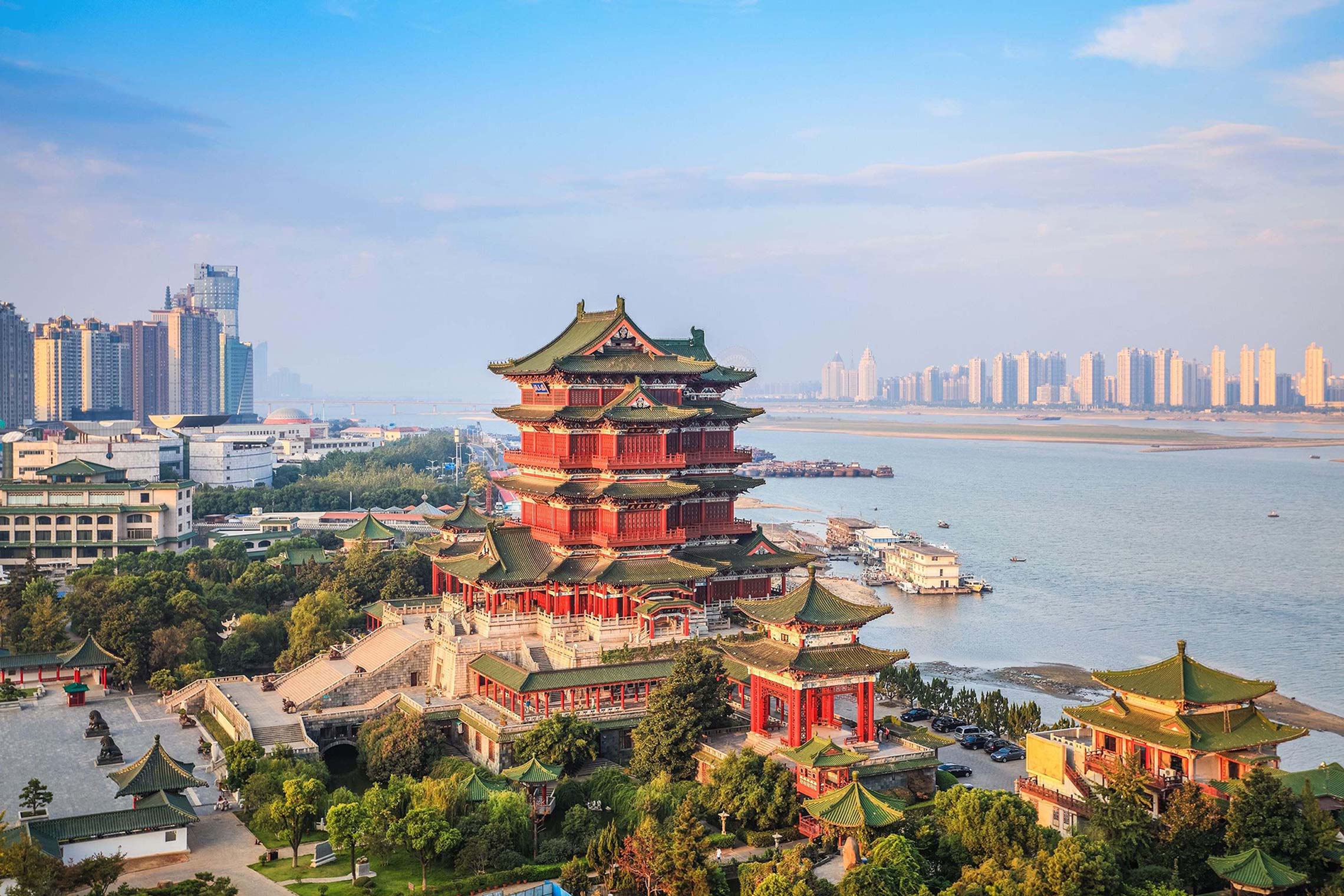
Nanchang, the capital of Jiangxi Province, is located in the north-central part of the province, along the lower reaches of the Gan River and on the southwestern shore of Poyang Lake. It lies in a subtropical monsoon climate zone with distinct seasons and abundant rainfall. The annual average temperature is about 17-18°C. Summers are hot and humid, while winters are mild with little snow.
Nanchang, with a history of over 2,200 years as a city, is renowned as a heroic city, famous for the first shot of the August 1st Nanchang Uprising in 1927. The city blends revolutionary history with the charm of a Jiangnan water town, and historical sites like the Pavilion of Prince Teng highlight its cultural heritage.
Nanchang has a rich cultural atmosphere, with intangible cultural heritages such as Gan Opera and porcelain plate paintings passed down to this day. Nanchang mixed rice noodles and clay pot soup are the daily favorites of locals, and the aroma of chili and spices fills the streets and alleys, creating a leisurely pace of life.
As the core of the middle reaches of the Yangtze River city cluster, Nanchang is vigorously developing industries such as electronic information and aviation manufacturing. Nanchang International Airport connects to the world, its subway network is increasingly improving, and it will be built into a modern international metropolis in the future.
The best time to visit 南昌 is Spring and autumn are the best seasons..
The best time to visit Nanchang is spring (March to May) and autumn (September to November), when the temperature is moderate, rainfall is low, and the weather is pleasant. Spring brings blooming flowers, while autumn offers clear and crisp weather, making both seasons ideal for outdoor sightseeing.
Spring (March–May) In Nanchang, temperatures rise to 15–25°C, but spring rains are frequent, so rain gear is recommended. It is advisable to visit Meiling National Forest Park to admire azaleas, or take a stroll along the Ganjiang River to experience the revival of nature.
Autumn (September-November) in Nanchang is cool and dry, with temperatures between 15-25°C, making it the golden period for outdoor activities. During this time, you can participate in the Mid-Autumn moon-viewing event at Tengwang Pavilion or go to Poyang Lake to watch migratory birds (best in October-November).
Emperor Gaozu of Han, Liu Bang, established Yuzhang Commandery, and the city of Nanchang was first built, which has a history of over 2,200 years.
The Chinese Communist Party launched an armed uprising in Nanchang, firing the first shot in armed resistance against the Kuomintang reactionaries, making Nanchang a city of heroes.
Nanchang Hongdu Aviation Industry Group was established, becoming one of the cradles of New China's aviation industry.
The Tengwang Pavilion was reconstructed based on historical records and opened to the public, becoming a landmark attraction in Nanchang.
The Changjiu Intercity Railway opened, ushering Nanchang into the high-speed rail era and enhancing its status as a transportation hub.
Recommended places to visit

One of the three great towers south of the Yangtze River, famous for Wang Bo's "Preface to the Pavilion of Prince Teng," from which visitors can overlook the beautiful scenery of the Gan River.

The thematic museum commemorating the 1927 Nanchang Uprising, located at the site of the uprising, showcases revolutionary history.

Natural oxygen bar in the outskirts of Nanchang, with rhododendron sea in spring and summer resort. The highest peak is Xiyao Lake.

The world's third tallest Ferris wheel, standing at 160 meters, offers a panoramic view of Nanchang's night scenery, with the sparkling lights along both banks of the Gan River.

The ancient pagoda, first built in the Tang Dynasty, has a food street at its base where you can taste authentic Nanchang snacks.
UNESCO World Heritage Sites

A World Cultural Landscape Heritage about 100 kilometers from Nanchang, renowned for its strange peaks, sea of clouds, waterfalls, and profound cultural heritage.

Explore rich intangible cultural heritage and traditional crafts

Jiangxi local traditional opera, integrating Yiyang tune, Qingyang tune, etc., features bold and unconstrained performances with high-pitched singing.

The unique art form of painting on porcelain plates, with Nanchang as an important birthplace, features a wide range of subjects and vibrant colors.
Must-know transportation for exploring the city
About 25 kilometers from the city center, with over 100 domestic and international routes. Airport shuttle buses Line 1 and Line 2 go directly to the city center, fare 15 yuan. Taxi costs about 100 yuan.
机场大巴15元
Nanchang Station is located in the old city area and mainly operates regular trains; Nanchang West Station is a high-speed rail station connecting major cities across the country. Metro Line 2 connects the two stations.
高铁二等座至北京约600元
Nanchang has opened 4 metro lines (Lines 1, 2, 3, and 4), with fares ranging from 2 to 6 yuan. Bus routes cover the entire city, with most fares at 2 yuan. Alipay or WeChat ride codes can be used.
地铁2-6元
Taste the most authentic and popular local specialties
Nanchang's most representative breakfast: rice noodles boiled, then mixed with chili, peanuts, and dried radish, smooth and flavorful.
Soups simmered slowly in earthenware pots over low heat, preserving the original flavor. Common varieties include meatball soup, spare rib soup, and more.

Poyang Lake’s specialty, Artemisia selengensis, stir-fried quickly with cured meat, is fragrant, tender, and crisp—a signature dish of Nanchang.

Traditional dessert made from glutinous rice flour, deep-fried and coated with white sugar. Crispy on the outside, chewy on the inside, sweet but not cloying.

Street snacks, various ingredients (such as lotus root balls, sausage knots, tofu puffs, etc.) are cooked in spicy soup, making them fragrant and delightfully spicy.